The full cover-art product overview.
Framecult album cover generator for underground drops
Framecult album cover generator flow—lanes, crops, kits—without the SaaS sheen.
If you are an independent artist shipping to Spotify, SoundCloud, Bandcamp, or a distributor, the cover is doing quiet work long before the first bar: it tells strangers whether your release belongs in their world. Most AI album cover generator products treat music as an afterthought. Framecult is a release desk first: thirty hand-tuned visual lanes, each with typography, grain, layout, and color behavior locked to a scene. You choose the lane; the system handles the packaging logic.
That difference matters for musicians who release often. Generic AI art tools excel at one-off fantasy illustrations or stock-looking scenes. They rarely give you a repeatable visual language across singles, EPs, and aliases. FRAMECULT is built for a catalog mindset: the same lane reads like the same art director signed off on the whole run, so your discography feels intentional instead of accidental.
Underground and electronic artists usually need more than a single square image. Promo asks for verticals; avatars want a tight crop; stores want a square that still reads when scaled down in a playlist row. FRAMECULT exports a kit aligned to how people actually post music: a 1:1 master at 1800×1800 pixels, a 4:5 crop at 1080×1350, and a 9:16 crop at 1080×1920, plus a clean square—so you are not rebuilding composition in another app the night before the drop.
Independent artists also need speed without embarrassment. The studio flow is deliberately small: artist, track, mood—then generate. The lane is the prompt. You are not competing with everyone else typing the same “cinematic album cover 8k” string into a shared model; you are locking into a lane tuned for nightlife, Y2K chrome, confessionals, scan texture, and the other moods that actually show up in contemporary underground covers.
Compared to generic AI art tools, the tradeoff is honest: you are not infinite-style. You are high-signal lanes that read as real releases on first glance—which is usually what independent acts need when they are cold-reaching curators, labels, and fans who scroll fast.
Who this is for
Rappers, wave producers, hardwave DJs, witch-house projects, drift phonk aliases, electroclash acts, and dark electronic artists—anyone who ships often and wants covers that feel like part of the same desk, not thirty random aesthetics tied to the same alias.
Examples
Lane stills from shipped approvals (same export discipline applies across lanes).
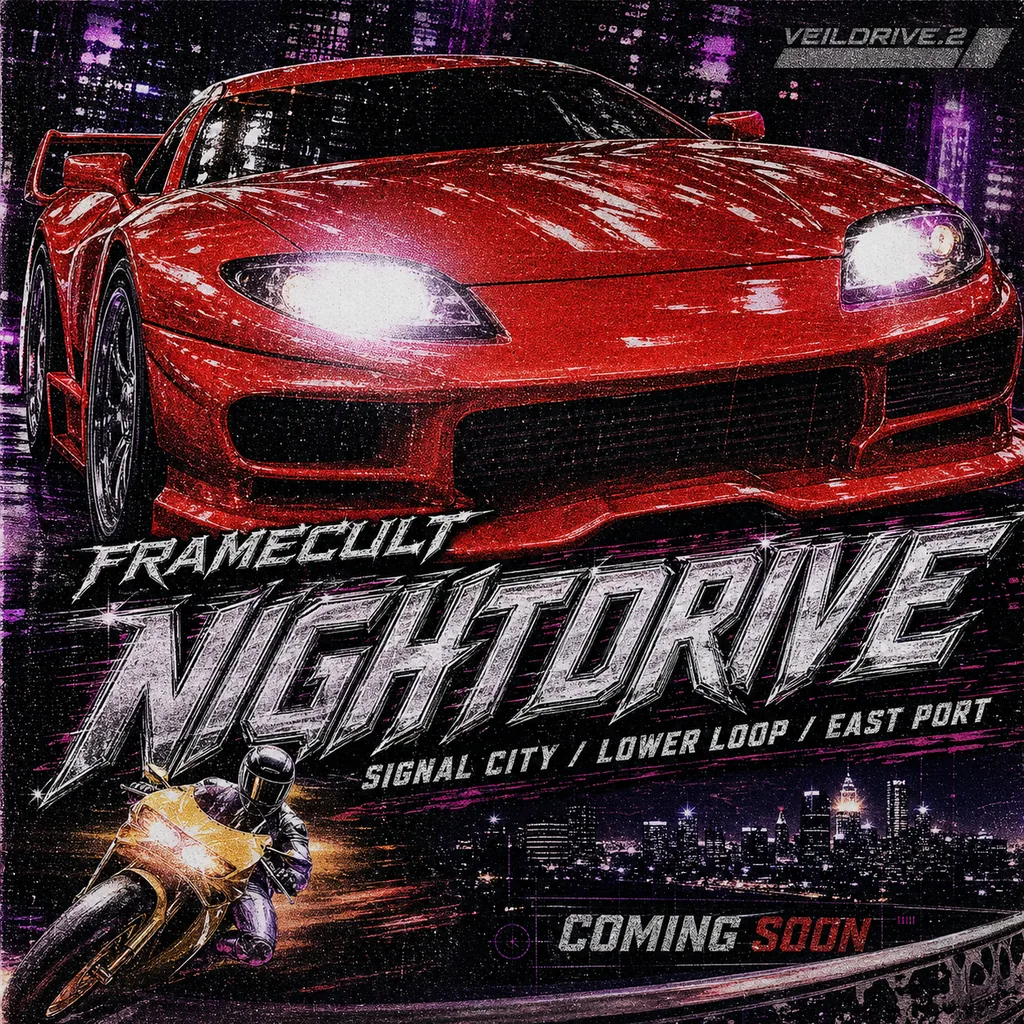
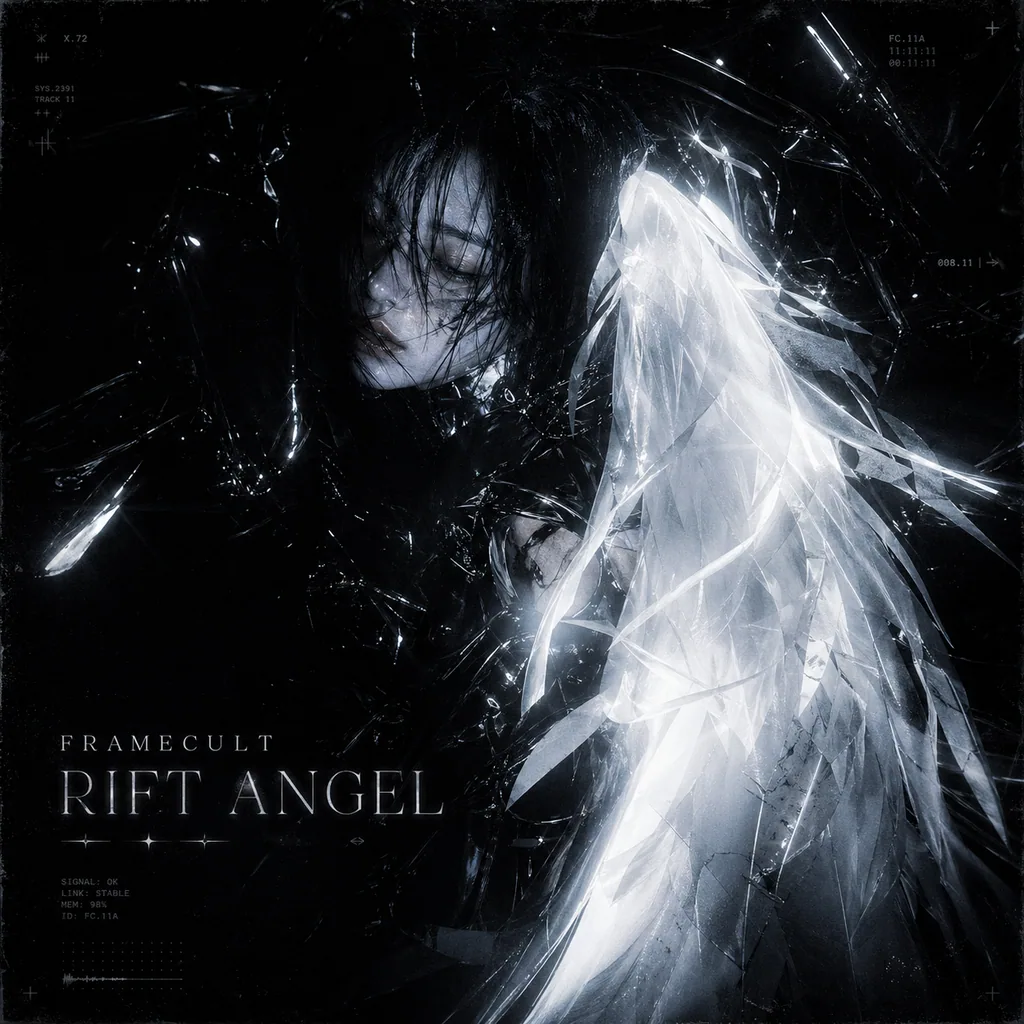
Ready to try it? Open the studio with a lane preselected—Night Chrome is the default club-flash direction—or browse all lanes on the homepage. New accounts get three free credits with no credit card; paid plans and the Day Pass are listed on pricing.
Related: Home · Electronic covers · Spotify cover art · SoundCloud art · Independent artists · Phonk lane ideas
Frequently asked questions
- What makes FRAMECULT an AI album cover generator for musicians?
- FRAMECULT is tuned for release packaging: you pick a fixed visual lane (typography, texture, layout), enter artist, track, and mood, and export a kit with a square master plus 4:5 and 9:16 crops. It is built for independent artists who need distributor- and social-ready art, not random one-off images from a generic AI art tool.
- How is this different from a generic AI image generator?
- Generic tools optimize for any prompt. FRAMECULT optimizes for underground music covers: each lane is a locked art direction. You are not inventing a style from scratch every time—you are placing your drop inside a world that already reads as a finished record.
- Does it handle Spotify and SoundCloud crops?
- Each cover build ships a full kit: a 1:1 square master at 1800 by 1800 pixels, a 4:5 feed crop at 1080 by 1350, and a 9:16 story crop at 1080 by 1920, plus a clean square export. If a store requires a larger minimum square file, upscale from the master to meet their spec.
- Do I need to write long prompts?
- No. The lane carries the visual language. You bring artist, track title, and a short mood line—the desk translates that into cover-ready artwork.